Paul Saffo, technology forecaster and futurist, predicts Robots to be the next big ‘Wow’ of the 21st century. Here is what he says, talking to the InnovationBeat newsroom.
Wednesday, March 12, 2008
Paul Saffo: Robots the Next Big Thing


All-Electric Tesla Roadsters Lined Up in Assembly Plant
Tesla's Vice President Darryl Siry takes us on a tour of the assembly plant in San Carlos, CA.
Tuesday, March 11, 2008
Virtual reality changing social behaviors

Maybe virtual reality is going to solve one of the greatest health issues facing Americans today - physical inactivity – by influencing their social behaviors through computer simulation.
“We have developed model that allows people to see what they are and how they look like on TV,” says Jeremy Bailenson at the Virtual Human Interaction Lab at Stanford University.
Jesse Fox, a candidate for Ph.D, who has actually done the studies and developed the model, says, “People who look at themselves running in virtual reality for a period of 24 hours actually exercise more in the real world”.
“This seems to indicate that program will make them do it (exercise) later or change their life pattern”, she says, speaking about a study she made about how people experience virtual reality.
Ms. Fox explains that she has created another program in which a teacher in virtual reality looks at every student at the same time. This makes the teacher appear more life-like. So students pay more attention to the lecture.
“In virtual reality, we can produce unique, new social structures,” Ms. Fox says.
Can lesson from the lab be used in business? Bailenson and Fox say they are not worried about the commercial relevance of their research. “It is not our job to do marketing,” says Ms. Fox. “We have developed a program. It is now up to the people who do business how they transform it in the market place.”
Two new players challenge the navigation market
While stopped in traffic, have you wanted to read the menu at an unfamiliar restaurant? Now you can do that -- and much more -- with new automobile navigation systems from a very young company and a very old one.
Over the next few months, Dash Navigation, of Mountain View, Calif., and the German automobile giant, BMW, plan to launch new navigation systems. Both companies previewed them at a Mobile Monday event hosted by Google at its headquarters this week.
Dash Navigation showed off a new Web 2.0-type "mashup" for cars; a Web-enabled GPS device that combines navigation -- how to get somewhere -- with information about what you can do, spend or buy when you get there. The information also includes customer ratings and low-price options.
Chris Butler of Dash handled the demonstration, deftly producing a favorite sushi restaurant from a general query. Mr. Butler also showed that the system can receive and benefit from information from a driver's personal computer.
Now Dash uses data provided by Yahoo, but "in the future we might use data from Google," Mr. Butler said, making his listeners -- consisting of dozens of journalists, engineers and business people -- chuckle in between eating slices of pizza, bought and paid for by Google.
The Dash system, presented by Mr. Butler, also shows how much traffic there is and suggests the fastest route to a destination. This is done by collecting data from other Dash users and comparing it with historical data collected, said Rob Currie, President and Chief Operating Officer of Dash.
Mr. Currie, who also was at the meeting, admitted that Dash's che challenge at this point is that there are not so many Dash users in order to provide adequate data for a complete picture of traffic flows. The system is designed to work better the more people use it.
The cost of the Dash system came as a surprise to some in the audience. The device, which will go on March 27th, will cost $599.99. In addition, there is a $10 monthly service fee.
"Why would anybody want to pay that much for traffic information system that has far too little data," wondered an engineer in the audience.
Some popular navigation systems can be purchased for under $200.
BMW, meanwhile, described new features to its existing navigation system, "BMW Connected Drive," which is currently sold in Europe. The product will be launched in the US market in April, said Jeff Zabel of BMW.
Mr. Zabel said the BMW system will make use of a Google application that includes current, accurate maps to be sent from a personal computer to the car's computer.
BMW has in the pipeline an application that allows a driver to browse the Web while sitting the behind the wheel -- hopefully stuck in traffic.

- After Dash was launched on March 27th, it has been tested by customers. Read what the Wall Street Journal's Walter S. Mossberg wrote about it.
Failing broadband policies a threat to innovation
The debate around network neutrality remains a hot topic of discussion among telecom companies and service providers. Vint Cerf, Vice President of Google, regards the lack of regulation a threat to innovation.
When Mr. Cerf and his colleagues at Stanford University built the foundation for today’s Internet back in the 1970s’, they built it as an open environment that would be accessible to anyone. The past 20 years have seen a transformation of the Internet and how people access it, from dial-up telephone modems to different types of broadband connections, either by cable, DSL, satellite or fiber.
“Many broadband suppliers suppress what should be an open media,” says Cerf. “Not only will that suppress open expression, but it will also suppress innovation. If you have to work in arrangement with every Internet service supplier in the world in order to try out your new service, it will essentially suppress the ability to invent and innovate in the Internet.”
A number of companies, including Google, became quite alarmed when the former head of AT&T, Ed Whitaker, said, “companies like Google are getting a free ride and are not paying me for their use of my broadband channels to my customers.”
“Today there is a lack of competition in broadband which makes it possible for the party that controls the physical access to the Internet to favor that company’s applications”, says Cerf.
That’s not the business model Cerf and his colleagues had in mind when they started the net.
“So when Mr. Whitaker made his assertion a number of us begun to see the potential for very biasing decisions on the part of the broadband providers of things that were very antithetical to the interests of the consumers”, says Cerf.
In the last few years emotions have been running high in the American telecom business as Congress debates whether a law should be passed saying you must not discriminate among the application providers. Suppliers of broadband promise they will not favor their own services over others, but treat everyone essentially the same.
“After the telecoms and cable companies asserted in hearing that they would never interfere with someone else’s traffic, it was discovered that Comcast was analyzing the traffic that was flowing on their broadband channels”, says Cerf. “Anyone who was running bit torrent was shut down. I don’t blame them for wanting to control the traffic, but they chose a method to do it that was chilling because it implied that someone who controls the underlying transport could decide what traffic could flow and what traffic could not flow on the basis on what kind of traffic it was.”
Cerf likens broadband access to other critical infrastructure such as roads, electricity, and water:
“In other parts of the world it is recognized that this is basic infrastructure and there may not be a natural ability to put in competitive, alternative physical facilities. In the United States facility-based competition has been the mantra of the Federal Communications Commission (FCC) for some time now and frankly I don’t believe it works. And in the absence of that we have to create the regulatory framework that says you cannot take advantage of your carriers to interfere with applications.”
Monday, March 10, 2008
Break-through for all-electric sports car
There are only six days to go before the first Tesla Roadster, an all-electric sports car, is scheduled to roll out from its San Carlos, California plant. The car is an important experiment in the shift towards all-electric, zero-emission automobiles.

Series production is re-scheduled to commence on March 17. Tesla Motors, a private company funded in part by a founder of Paypal, was
supposed to start production in October of last year, but problems with its car's transmission system delayed release. Laurie Yoler, a board member of Tesla Motors, confirms the introduction schedule in an interview with InnovationBeat.
The Tesla Roadster is a unique experiment, combining the style of a top-line 2-seat convertible sports car with the environmental profile of a sensible hybrid. The company wants to lead the changeover to electric cars without compromising on elegance.
Tesla plans to build only 600 cars this year. Every car is delicately put together with inputs from suppliers and partners scattered around the globe. Design and most of the assembly is made by Lotus Cars in England, motor production takes place in Taiwan, the brakes come from Germany and the chassis is Norwegian.
On a single full charge, the Tesla Roadster can roam for 220 miles. This is a little difficult to imagine, as it runs on exactly the same litium ion batteries that you find in your MacBook. Tesla's battery capacity equals the power of more than 1,000 such computer batteries. Just the battery costs more than $20,000, corresponding to one fifth of the car's selling price.
The Roadster holds a top speed of flabbergasting 125 mph. Initially it was supposed to go from 0 to 60 mph in merely 4 seconds. The car that is rolling out on Monday will take 5.7 seconds to do that move, however, in order to meet the strict durability standards. Despite missing its initial acceleration target, the Tesla Roadster still accelerates better than most cars on the road.
 Ms. Yoler, the board member, is a managing director of the investment bank GrowthPoint Technology Partners. It helps entrepreneurs raise capital for their ventures and later take them public or strike merger deals. Her involvement in Tesla Motors dates back to her former colleagueship with Tesla's founder Martin Eberhard. The two assoicates went for a joyful lunch ride in the first Tesla prototype that was made in 2002.
"I believed strongly in the entrepreneurs", says Ms. Yoler. "When they asked me to take a test drive it was amazing. The sheer innovation behind it was unbelievable."
As part of Tesla's high-end marketing strategy for the car, celebrities like Governor Arnold Schwarzenegger and Google founder Larry Page are among the first buyers. The price starts at about $100,000, which makes Tesla more than double the price-tag of Norwegian electric car brand Think. However, Tesla prefers to be compared to traditional sports cars like Porsche, Lotus and Lamborghini rather than the other electric carts for sale so far.
To distinguish themselves further, the Tesla team will not have a traditional dealer network. Instead, the car will be sold on the Internet, with showrooms in Menlo Park and Los Angeles.
"High end sports cars do not normally test drive", explains Ms. Yoler, making it very clear in which lane she wants to steer Tesla.
No doubt there is still a long road to success for this venture. Ms. Yoler is one of 20 private investors who together with another 10 institutional investors have put in a total of $150 million.

Series production is re-scheduled to commence on March 17. Tesla Motors, a private company funded in part by a founder of Paypal, was
supposed to start production in October of last year, but problems with its car's transmission system delayed release. Laurie Yoler, a board member of Tesla Motors, confirms the introduction schedule in an interview with InnovationBeat.
The Tesla Roadster is a unique experiment, combining the style of a top-line 2-seat convertible sports car with the environmental profile of a sensible hybrid. The company wants to lead the changeover to electric cars without compromising on elegance.
Tesla plans to build only 600 cars this year. Every car is delicately put together with inputs from suppliers and partners scattered around the globe. Design and most of the assembly is made by Lotus Cars in England, motor production takes place in Taiwan, the brakes come from Germany and the chassis is Norwegian.
On a single full charge, the Tesla Roadster can roam for 220 miles. This is a little difficult to imagine, as it runs on exactly the same litium ion batteries that you find in your MacBook. Tesla's battery capacity equals the power of more than 1,000 such computer batteries. Just the battery costs more than $20,000, corresponding to one fifth of the car's selling price.
The Roadster holds a top speed of flabbergasting 125 mph. Initially it was supposed to go from 0 to 60 mph in merely 4 seconds. The car that is rolling out on Monday will take 5.7 seconds to do that move, however, in order to meet the strict durability standards. Despite missing its initial acceleration target, the Tesla Roadster still accelerates better than most cars on the road.
 Ms. Yoler, the board member, is a managing director of the investment bank GrowthPoint Technology Partners. It helps entrepreneurs raise capital for their ventures and later take them public or strike merger deals. Her involvement in Tesla Motors dates back to her former colleagueship with Tesla's founder Martin Eberhard. The two assoicates went for a joyful lunch ride in the first Tesla prototype that was made in 2002.
"I believed strongly in the entrepreneurs", says Ms. Yoler. "When they asked me to take a test drive it was amazing. The sheer innovation behind it was unbelievable."
As part of Tesla's high-end marketing strategy for the car, celebrities like Governor Arnold Schwarzenegger and Google founder Larry Page are among the first buyers. The price starts at about $100,000, which makes Tesla more than double the price-tag of Norwegian electric car brand Think. However, Tesla prefers to be compared to traditional sports cars like Porsche, Lotus and Lamborghini rather than the other electric carts for sale so far.
To distinguish themselves further, the Tesla team will not have a traditional dealer network. Instead, the car will be sold on the Internet, with showrooms in Menlo Park and Los Angeles.
"High end sports cars do not normally test drive", explains Ms. Yoler, making it very clear in which lane she wants to steer Tesla.
No doubt there is still a long road to success for this venture. Ms. Yoler is one of 20 private investors who together with another 10 institutional investors have put in a total of $150 million.
Vint Cerf's Internet Wishlist
 What is the Internet missing?
"Better safety," says Vint Cerf, Google's vice president and Chief Internet Evangelist.
Cerf is 'the father of the Internet', so his opinion matters. Here is his wishlist:
- Semantic Web.
- Broadband internet access for everybody.
- Multilingual, simultaneous translation from text and conversation.
- Better use of radio communication in the net.
- And, one of the most fascinating ideas: extra-terrestrial web.
Is it all possible?
"It is," Mr. Cerf says.
Mr. Cerf's past accomplishments give him the credibility to forecast the future. He helped build the foundation for today's Internet in the early 1970's while working as a an assistant professor at Stanford University. With colleagues, he wrote a blueprint for TCP/IP-protocol. The protocol transformed the defense department network project named Arpanet into the Internet we all know today.
Mr. Cerf travels around the world giving talks about the internet and it's future prospects. He is "trying to make things happen," he says, adding, "I'm not interested in theory only."
Friday, March 7, 2008
Apple Wants iPhone Inside the Corporations

Up until now, the iPhone has been looked upon as a mobile device with a mostly recreational function, with many features heavy on entertainment. Free phones have been distributed by the hundreds to companies such as Genentech and institutions such as the Stanford University.
Despite the positive response from users, IT departments have been sceptical because of the iPhone’s lack of certain functions, such as corporate email, and potential security issues.
For serious corporate work, the BlackBerry has been the most popular tool. On Thursday, Apple took a step towards changing that by announcing the support for Microsoft’s widely used Exchange message system. Apple also said that IT departments will also be able to access iPhones from a central location, wiping out vital information in case the devices are stolen or lost.
Apple’s iPhone announcement was much anticipated and is viewed by many as an attempt by Steve Jobs to silence critics. With the announcement, Mr. Jobs seems to recognize that the technical and commercial environment surrounding the iPhone is changing quickly. Thursday afternoon, after Jobs had presented the SDK (software developer’s kit) aimed at letting independent developers get more of a say of how the iPhone should be direction, Apple opened a web site where anyone can download free beta versions of the kit. Interest was so huge that the site stalled almost immediately.
There was a lot of excitement in the air even before the analysts, bloggers and reporters – all permitted entry by invitation only – would entered the Town Hall theatre on the Apple campus. In the great universe of echoes, the world where Mac-fans live, Fortune magazine was referring to rumors posted by MacRumors, who quoted a posting by MacScoop. Minute for minute, every word of Steve Jobs was transmitted to the world inside what Fortune-journalist Philip Elmer-DeWitt call “the reality distortion field”, a place where people standing close to Jobs start to believe everything he says.
Perhaps of greatest interest to the community of die-hard Apple fans, the company is offering a chance for developers to sell new applications through Apple and get 70 percent of the revenues. This is a great leap forward for the software community, which until now has had great problems designing programs for a vast variety of mobile phones.
To get the development going faster, Apple said it will cooperate with the venture capital firm Kleiner Perkins Caufield & Byers, who will set up a new fund worth 100 million dollars for start-ups that write applications for iPhone.
Some of the big issues regarding the iPhone remain alive. For instance, the iPhone is still locked to a single carrier, AT&T, meaning that owners cannot switch to another carrier without ditching or disabling the phone. There still is no file transfer via Bluetooth, no way to use Skype, no use of 3G standard and no video camera.
That leaves lots of work for Apple’s engineers and its chief salesman, Steve Jobs.
Thursday, March 6, 2008
New Strategy for HP Labs: Placing Fewer, Bigger Bets

In a major shift in priorities, Hewlett Packard’s corporate laboratories will concentrate its effort into 20 to 30 big projects, instead of the roughly 150 smaller projects that it currently supports. The new strategy aims to get more products out of the research labs, and into customer’s hands, in less time.
Prith Banerjee, has been head of HP Labs, Hewlett Packard’s corporate research facility, since August 2008. On Thursday he announced a new direction for the Labs. HP Labs will reorganize into 23 new, independent labs, in seven locations around the world. At the same time, research will be concentrated far fewer projects than today.’
“We are going to refocuse our efforts into 20 to 30 big bets, instead of the 150 smaller ones we used to work on”, said Prith Banerjee.
The reason for the change of direction is simple: HP wants to be able to commercialize more of the work done at the Labs. And the company also wants to speed up the transfer of new technology from the Labs.
“It is the one who comes fastest with a new product to the market who wins,” said Mr. Banerjee.
As a way to speed up the tech-transfer process, the Lab is setting up a Technology Transfer Offfice. It will be responsible both for bringing product development from the Labs into HP’s business units, and for licensing agreements with other companies.
In the future, technology transfer at HP is also going to mean people transfer. The researchers behind a new technology will be put in a group with the business units engineers, working together to get it turned into new products fast. According to the company’s management, the reorganization is not a cost-cutting measure.
“This is one of the few places in the world where the R in R&D is still left. We got a great team in the Labs, a great leader in Prith,” said Mark Hurd, Hewlett Packard’s CEO.
The new direction doesn’t mean the end of all blue sky research at the labs. Quite the opposite. Said Mr. Banerjee, “We are allocating one third to basic exploratory work, which is more than we did before.”
Other measures taken by HP include a new practice of inviting venture capitalists to become entrepreneurs-in-residence at the Labs. This will give the venture firms and their portfolio companies easier access to the Labs’ work. The first to participate is Foundation Capital, a VC firm based in Menlo Park.
In a world where many large companies are ending centralized research altoghether, HP is trying to find a way to keep alive the traditon, but give it new relevance. There is one potential downside, though. When you bet on fewer, bigger projects you might ditch the wrong project. Banerjee’s “solution” is to form an internal review board, with people both from the research and business sides of the company, to evaluate all yes-or-no decisions on projects.
Vint Cerf Says
"It's good for innovation to let everyone be a part of it. The point is that you want everyone's contribution to count."
"New innovations do not happen unless someone is discontent. I found that out in high school... but I wasn't an unhappy high school student."
"Internet was meant to carry pieces of data from one place to another. End of story."
"There is no reason for news media to die, except for one thing: the business models are to tied up to the delivery models. That has to change"
"If it doesn't work, it doesn't work. If we're not failing from time to time, we're not pushing the envelope enough.""Always look for innovations where there is an unsustainable system. By 2050, the oil tankers of today will be the water tankers of tomorrow."
"I am a 19th century man living in the 21st century"
Vint Cerf on Wikipedia

How To Succeed With Innovation
Have courage and a willingness to take risks, but don't over-analyze: that is what the former driving force Applied Materials chief, Dan Maydan, sees as the foundation for a successful innovator. According to Maydan, one should not go too deep into technology, otherwise you will end up dismissing every idea with the argument that it has been done before.
This may seem surprising, considering that remarkable inventions have been a part of his daily life even before he moved to Silicon Valley from Israel in 1967. Dr. Maydan also has a place in Silicon Valley's Engineering Hall of Fame. But he is no purist. He believes that innovation has a commercial component, and in that sense many of the great scientists, not even Einstein, can not be labeled as innovation. To succeed, an innovation must be commercially successful.
Dr. Dan Maydan studied engineering at the Israel Institute of Technology and holds a Ph.D. in Physics from Edinburgh University of Scotland.
Dr. Maydan's most important work was done at the Bell Labs and later at Applied Materials, where he had a pivotal role in developing specialized equipment for the semiconductor industry. These include manufacturing systems for the world's most advanced integrated circuits. At the Smithsonian Institution in Washington D.C. one can admire the Precision 5000, Applied Materials' groundbreaking tool developed under the leadership of Dr. Maydan. Today the tool is considered to be one of the technologies that is a part of chip history and thereby has helped shape society in many ways.
Dr. Maydan was a member of the board of Applied Materials between 1992 and 2003, and the president from 1994 and onwards. He says he is an admirer of, among other companies, Apple, Google and Johnson & Johnson.
When looking at the chip industry, he says that the days of great invention are past us and are mainly about reducing power consumption.
“Semiconductors are no longer a world of technology, but a world of manufacturing," says Dr. Maydan. "The development is very slow, the semiconductor is mature now.”
Instead, he seems more excited about the biotech industry, and how the human brain will be put into more work, tuned into a different logic.
Venture Communists and Interplanetary Internet
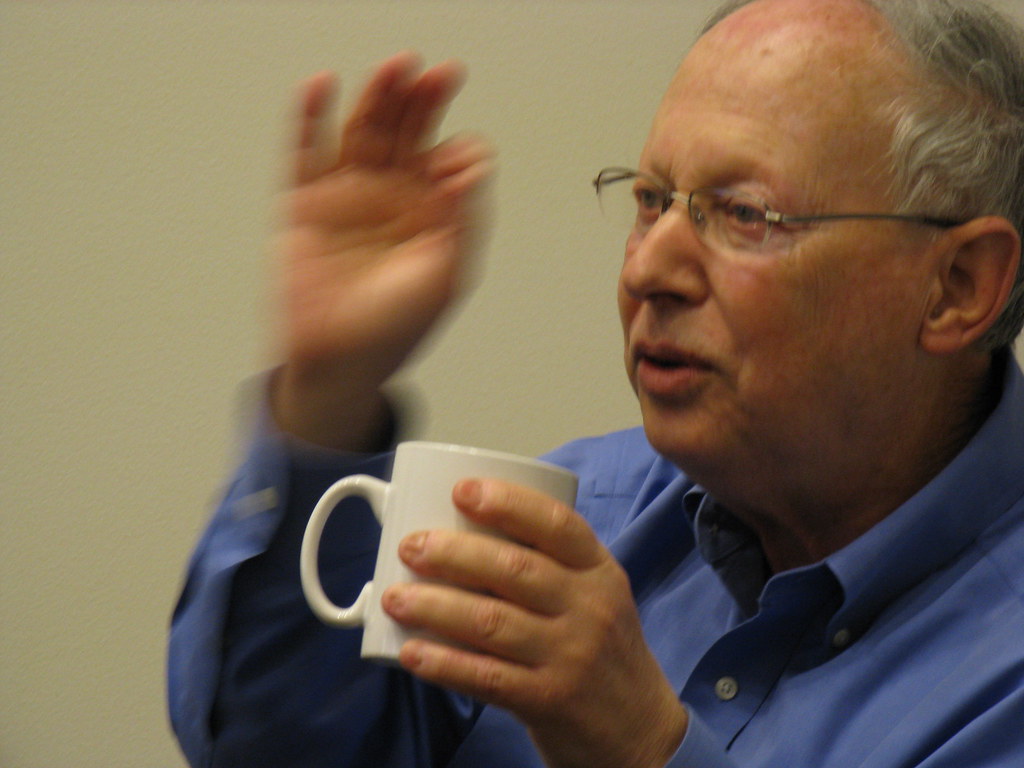
But aren't Chinese people too subdued? "That might have been true 40 years ago, and even 20 years ago," Cerf says. " But definitely not 2008." The key is discontent. That is what Vint Cerf calls the major force of innovation - and Chinese people have got it. "They are no longer happy to stay where they are." Cerf says. "They want to improve their standard of living, and they are willing to work for it." " China is showing serous signs of innovating on their own," he adds. " And with the large-scale industry they are now in power to dictate what the standards should be." His words weigh a lot. The guy is after all known as one of the fathers of the internet. Presently the vice president and "Chief Internet Evangelist" of Google he is still in the midst of innovation. So what is he up to now? "Interplanetary internet" he says. It's true. Google it.
" Venture communists" - that's what Vint Cerf calls the Chinese entrepreneurs. Unlike Dan Maydan, who took the flor of the Innovationbeat newsroom yesterday, Cerf is certain that China is going to be able to replicate the success of Silicon Valley.

Wednesday, March 5, 2008
The Tale of Two Zachary's; or My Great Ape & Me

"I was drawn to the heart of Africa by a song," the ethno-musicologist, Louis Sarno, has written. I sometimes think I was drawn to Africa by a chimpanzee. I met my wife, Chizo Okon, in the Accra Zoo, in Ghana, where she served as the surrogate mother for an orphaned chimpanzee.
The photo alongside this post is of another chimp, this one orphaned by hunters in Cameroon who killed his mother. With the help of an American doctor and an armed soldier from Cameroon's army, we rescued this chimp, which we found staked to a post, sweating in the beating sun.
The chimp was the victim of a set of old technologies: the rifle and the chain saw. Loggers in the Congo basin need food. The hunters find them bushmeat. Together, a cycle of rationale incentives -- timber fetches money the world over and loggers must eat -- conspire to doom the species of animals that share more DNA with humans than any other.
New technologies are part of the campaign to save Africa's chimpanzees from extinction. At a protected sanctuary deep in the jungles of Cameroon, near the mighty Sanaga River, Dr. Sheri Speede protects some 50 chimpanzees of various ages. Electrified fences keep out wild chimps that might harass her own. Security cameras record human intruders. Advanced medical techniques enable Dr. Speede to provide birth control to the female chimps, so they don't bear babies in captivity. And various technologies -- from boats to cars and even the Exxon oil pipeline that runs near the sanctuary -- help her to reduce the abuses against the chimpanzees who remain in the forests near her.
Honestly, I am not much of an animal person. I've lived my whole in cities, surrounded by modern technologies seemingly designed for my comfort. In an African jungle, I constantly protect myself against malaria. I drink only boiled water. I eat only cooked food or fresh fruit. The idea of handling wild animals is ridiculous.
On the morning of the day we rescued this chimnpanzee, I prodded and cajoled Dr. Speede to drive 100 miles to check out a report we'd received of a baby chimp for sale. We drove for hours, the three of us in a battered truck, navigating bad roads and managing our worsening moods. In the final leg, we were carried across a wide river on a small ferry owned by the timber company. On the other side of the river, we stumbled on an hunters camp. When the soldier drew his gun, the hunters put down their machetes and rifles, and I released the frightened chimp.
He clung to me. Dr. Speede, in recognition of how I pestered her to attempt a raid, named the Great Ape after me. She calls him Zachary.
When we returned before nightfall to the sanctuary, I held the chimpanzee in my arms, showing him off to Dr. Speede's astonished co-workers. Proud of myself, I stood in awe of this animal's intelligence and grace -- until the moment he urinated all over me.
*
As I write these words, I sit in the comfortable Mermaid Inn, not far from my current assignment -- helping a merry band of Finns, Swedes and Pakistanis, experienced journalists all, gain an introduction to both Silicon Valley and American journalism. The third day of our journey together is coming to an end, and I listen to the late Momo Wandel -- an extraordinary Francophone singer from West Africa -- groan out the first song from the Last King of Scotland soundtrack. When I think of the technological innovations spawned by Silicon Valley -- the very computer I write with, my new Iphone, even the magical badge that permits me to open the door to our office -- I am awed by the power of ingenious people to steadily improve ordinary life. Yet the chimp pictured in my arms, so well protected by Dr. Speede, is a reminder of the fragility of our technological systems. How easily can human tools upset the mysterious balance of our world.
I hope tommorrow's innovators can somehow restore that balance, if not for me, than at least for my children. Can they somehow break out of the peculiar trap, whereby our tools enhance and diminish us at the very same time?
Getting the Stuff Out of the Garage
Hewlett-Packard will announce a new strategy for HP Labs Thursday 6 March. One challenge for the corporate research facility:
Get innovations out of the lab and into customers’ hands
They Labs were founded in 1962, at a time when founders Bill Hewlett and David Packard still ran the company; a time when HP was radically different from the printer and personal computer company it is today.
Last August the labs got a new director, Prith Banerjee. In an interview made when he had been three months on the job, he pointed out the transfer of technology from the lab to HP’s business units as one big challenge.
That will probably be the main theme tomorrow Thursday, when CEO Mark Hurd will announce the new directions for the corporate research facility.
HP Labs has met the same criticism as Xerox Parc and Bell Labs: The research is excellent, but it has not consistently translated into commercial products. The question is, how does a personal computer maker benefit from advanced nanotechnology research?
Several other high-tech companies have broken up their labs and transferred all R&D to the separate business divisions, in order to bridge the gap between research and product development.
However, the HP management will likely keep the labs as a central corporate facility, according to industry watcher Tim Bajarin:
”Basically, the reason why Mark Hurd will be there tomorrow is to reinforce the importance of the HP Labs. They have been an important part of HP’s strategy for decades.”
”What we are talking about is not a reorganization, more of clarifying the vision for the labs. How they can make their work more relevant to customers demands today.”
In other words:
If you don’t get your products out of the garage, you wont have anything to sell.


There is Only One Silicon Valley
MENLO PARK. Will there ever be another valley? A shining refuge of innovation culture and daring venture capital? Europeans and Asians alike sure hope so. Enormous amounts of yens, euros and kronor are right now being poured into Medicon Valleys, Telecom Valleys, Fiberoptic Valleys or whatever valleys getting policymakers aroused and reaching for their tax-dollar-wallets.
So - is it possible for them to replicate the success of Silicon Valley?
"No."
That is the crude answer - delivered by no less than Dan Maydan, former president of Applied Materials, and Silicon Valley Engineering Hall of Fame laureate.
He goes on after a while - reluctantly, as if the "no" answer should be more than obvious and quite sufficient.
"I think it's almost impossible," he says, further twisting the knife in the stomach of everyone that's ever uttered a sentence that involves the words "creating a cluster".
"It's all about culture. And one thing that is really hard to change, that is cultures."
It's hard to generalize, he acknowledges, but: The French are too analytical, Chinese people way too subdued and... yeah, well... let's stop right there, before we stir up a diplomatic icestorm.
Okey... how do you build successful innovation company then? If you're Swedish, French, German or Chinese?
Dan Maydan does not ponder.
"The first step is to move to Silicon Valley."

Dan Maydan conquers geography

After two hours’ invigorating news meeting we are pleased to have Dan Maydan here as our guest at Innovation Beat. He was president of Applied Materials until five years ago and is known to be one of the most famous inventors in the semiconductor industry.
“If you want to build an innovative company, you must come here”, says Dan Maydan, emphasizing the uniqueness of Silicon Valley.
Many countries are innovative in themselves, but they do not provide the unique environment that fosters continuous growth and reinventions of company offers. Small countries struggle to keep their inventions within their boundaries since there is always the option of selling the companies to bigger players in the global market, Silicon Valley being one of the primary destinations for these innovative embryos. Also, inventive people like Dan Maydan always face the option of going west.
Considering that so much of the success of Silicon Valley builds on input from abroad, it is clear that Silicon Valley should not be viewed as a physical spot on the American map. Instead, Silicon Valley is a gathering point for early stage innovative thinking that need special care to survive and translate into new products that provide customer value. Dan Maydan is a living example.
Companies Lack Innovation Systems
"Innovation is the only path to growth, but the US is lousy at it." says Curt Carlson, head of the research institute SRI International in Silicon Valley. He is sharing his best tips for companies who wants to survive in the new, fast moving world of business.
The number one question that any corporation should ask themselves, according to Mr. Carlson, is: what is the customer value?
“This is the most important definition in any business, but have you ever sat in a company who has had that discussion?” he asks rhetorically.
Mr. Carlson is an expert on innovation.
“The second most important definition for a company is value proposition," he continues. "Why should your customer stick to you?"
From experience, Mr. Carlson knows that many enterprises focus primarily on business ideas, but forgetting about customer needs and the cost-benefit ratio.
The problem, he says, is that companies today lack an innovation system. For innovation to take place, five things are necessary, he says. In addition to filling a customer need and creating value, the company must have people with new ideas, innovation teams and an organization adequately aligned to make use of it all.
Today, the industrialized economies are increasingly based on knowledge, as opposed to manufacturing. With this, a lot of new opportunities appear. The trick is to take advantage of them.
Governmental policies should normally aid in the process, but American policies leave a lot left to wish for, according to Mr. Carlson. With the introduction of Sarbanes-Oxley Act in 2002, it has become a lot more bureaucratic and costly for companies to go public. The consequence is that fewer companies grow big today.
“The waste is enormous”, says Mr. Carlson.
Mr. Carlson says that 40 percent of low tech companies survive after their five initial years, 10 percent of the consumer product companies and one-quarter of all the companies founded in Silicon Valley.
The immigration policies are not exactly aiding the inflow of brains either.
“We just passed a law making it next to impossible for Einstein to come to the US,” says Mr. Carlson.
He is disappointed with the media, who mainly focus on large companies and fails to shed light on interesting startups and medium sized enterprises. And he thinks it is imperative for innovation to become a discipline, a subject that can be taught, applied and improved in order to raise the awareness of it among the public.
“In order to play a piano you need to know how to sit, hold the hands, read the notes. It is the same with innovation”.With this, Mr. Carlson - who also happens to be a classical violinist - ends his speech.
But it is uncertain whether great musicians like Ray Charles, who was blind and therefore unable to read noted, would agree with him.
SRI International was founded in 1946 by Stanford University and became independent in 1970. It is a nonprofit scientific research institute conducting client-sponsored research and development for government agencies, commercial businesses, foundations, and other organizations. Some of their inventions include the computer mouse, electronic banking and technology for endoscopic surgery. SRI receives 0.5 bn USD in state funding per year and employs 2200 people all around the world.

"Innovation Can Be Learned"
Passion is a great driving force for new ideas and inventions. But sometimes you can get even further when being forced to become productive. That is certainly true for Dr. Curtis R. Carlson, President and CEO of SRI International. SRI is one of Silicon Valley’s most successful centres of technological innovation, having created the computer mouse, the modern PC interface, robotic surgery, high-definition television, electronic banking, and a host of other world-changing innovations.
Curtis R. Carlson started the high-definition television program that produced the US standard, and has been involved in the founding of more than 12 companies in various industries ranging from pharmaceuticals to internet services. However, his greatest invention is not a patentable, fabricated item like the conventional company innovation. It is the way SRI innovates.
“The way we work is the most important innovation,” says Curtis R. Carlson.
The great turning point for Dr. Carlson was when the laboratory of the Radio Cooperation of America (RCA) was sold to SRI International. At the time, Dr. Carlson was a middle level technical manager at RCA, spending $10’s of millions on research every year. Now, suddenly, he was asked to not only manage technical teams, but also to deliver something of real customer value and, as a result, to earn money for SRI.
“My team and I woke up and realized that we did not have a clue how to innovate,” says Dr. Carlson. “We had to learn how to do it out of desperation.”
Urgently, he called for a group gathering every second Monday night. Over some pizzas and Cokes they discussed innovation and Dr. Carlson asked everybody, including himself, to present the value proposition they were working on for their proposed innovation.
The group took about 18 months to understand the keys to innovation and become successful. One key turned out to be quite direct and certainly neither as mysterious nor as complicated as many people often believe. A starting point to success is to analyse and develop your value proposition, or as Dr. Carlson says, your NABC: the customers Need, your Approach, the Benefit/cost for the customer, and the rivals or alternatives you are Competing against.
“These four, deceptively simple, items must be answered for every initiative,” he explains. “The reason they are hard to get right is that in the beginning you don’t know enough about your customer’s needs, you haven’t built the best approach to addressing it with the best ideas and partners, and you don’t understand your competition. Getting all four parts of your NABC answered properly takes considerable work and many, many iterations. The simple NABC framework gave us a common innovation language and assured that we efficiently got the answers required. Most people don’t do that.”
“Our experience in our Monday night meetings proved to me that innovation could be studied and learned, it could be shared; and it could be continuously improved,” says Dr. Carlson. “I saw how powerful it could be once understood and how frustrating it was if you did not do that.”
Today creating successful innovations and teaching innovation are passions for Dr. Carlson, both on a professional level as well as on a personal level.
“I have seen it change people’s lives,” says Curtis R. Carlson. “I have seen their dreams come true. And once you see that happen, you never want to work any other way again.”
Tuesday, March 4, 2008
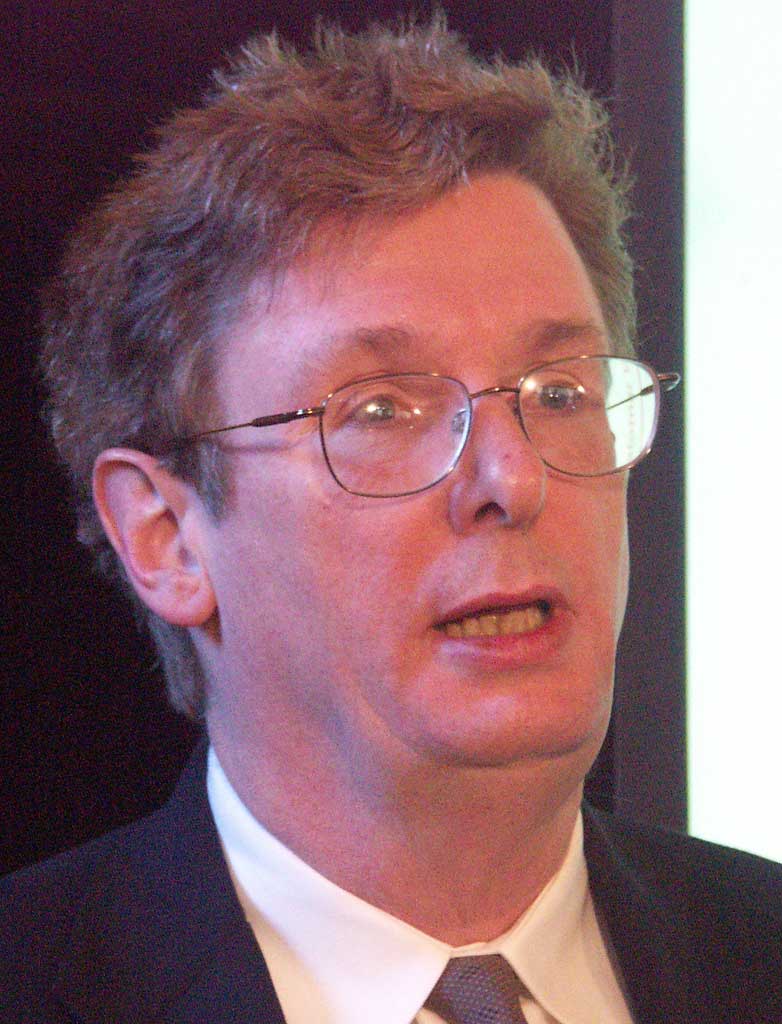
Carl-Gustav Linden

Carl-Gustav Linden, 46, is a business journalist from Helsinki, Finland who works as a television reporter for the Finnish Broadcasting Company, Yleisradio, the biggest media company in the country. Before 2003 he was a business reporter and a business editor at the daily newspaper Hufvudstadsbladet.
Since the autumn of 2007 he is also working on his PhD, trying to find establish between media, nationalism and economic development.
Carl-Gustav Linden has also written two books on business journalism. Landskampen - Nokia vs Ericsson i svensk och finsk press and Snabbhet, djup, relevans .
Off the Cuff
Khaleeq Kiani has come from a small village in Pakistan side of Kashmir, where he started his career as a teacher. He chose journalism as profession by choice and did Masters in Journalism from University of Peshawar. Driven by the passion to know and let his countrymen know how successive governments have been cheating them, he has contributed a lot of investigative and educative stories to the media, primarily being print. Many of the issues raised in his writings really made impact and forced the government to improve its policies for better and on ocassion made them reverse altogether as the public pressure developed.
Mr Kiani visited more than 18 countries in Asia, Europe, America and the Middle East and reported international events. His core areas of interest included from energy to macroeconomics and politics. He contributes a regular weekly feature column in Daily Dawn, Pakistan's largest English language newspaper. He also contributes a weekly economic article in one of Dawn's flagship economic weekly magazine "Economic & Business Review Weekly (EBR Weekly). In addition, he continues to extensively reports on economic, political and energy sector issues.
He will be working with Bloomberg Newsroom in SFO.
Subscribe to:
Posts (Atom)